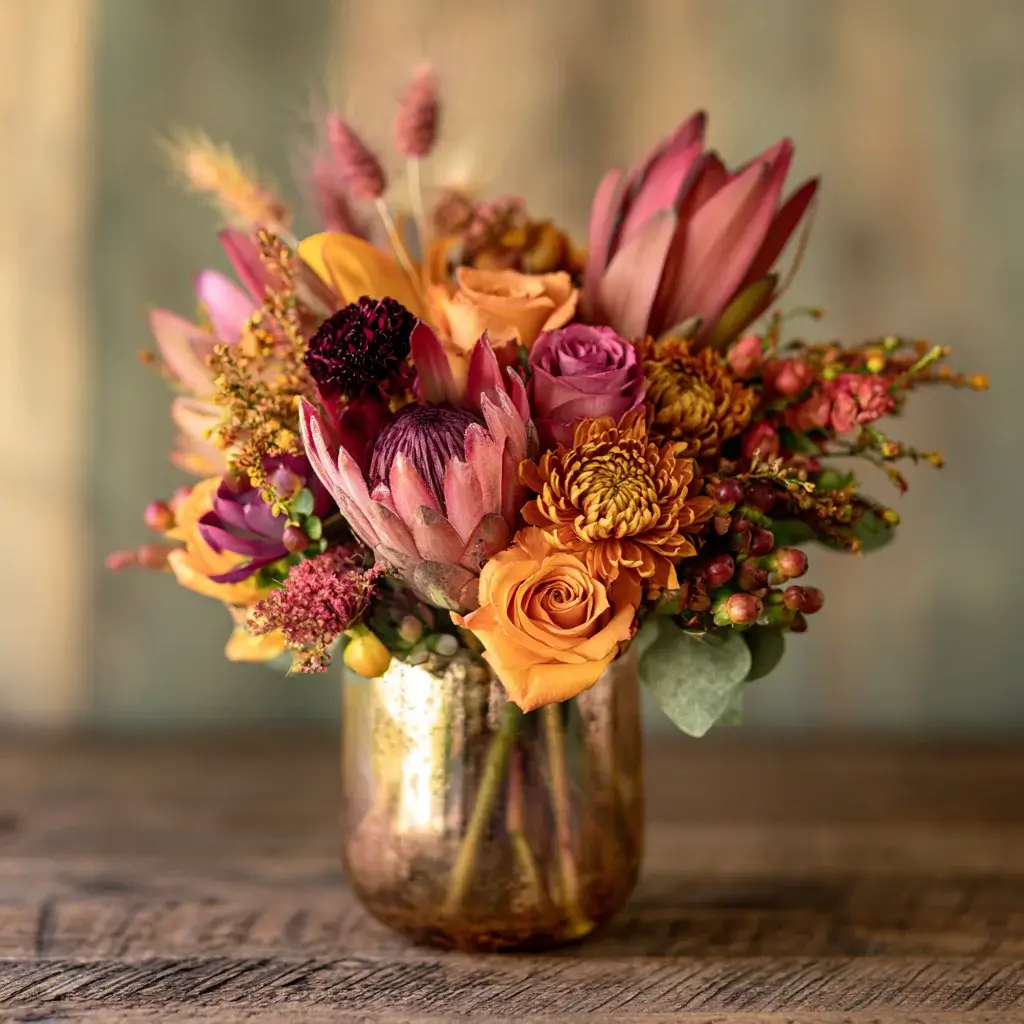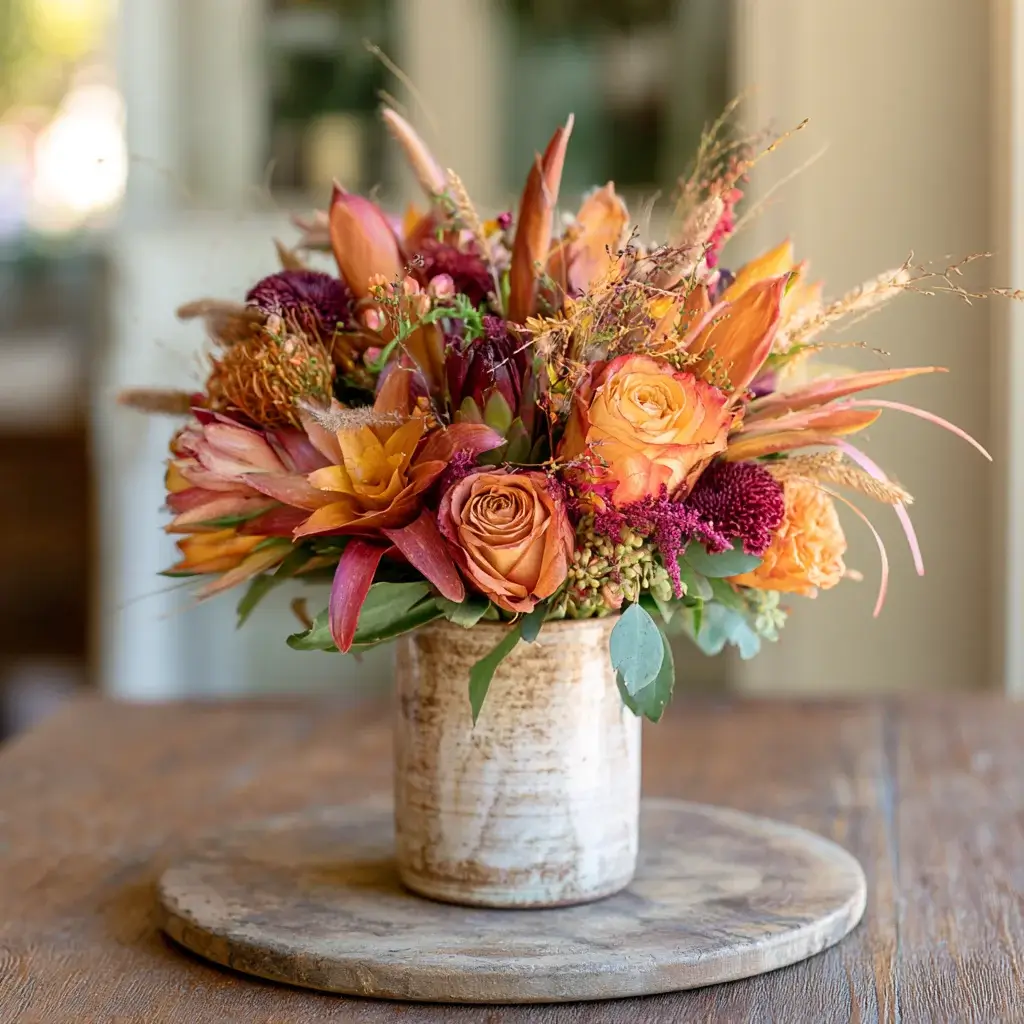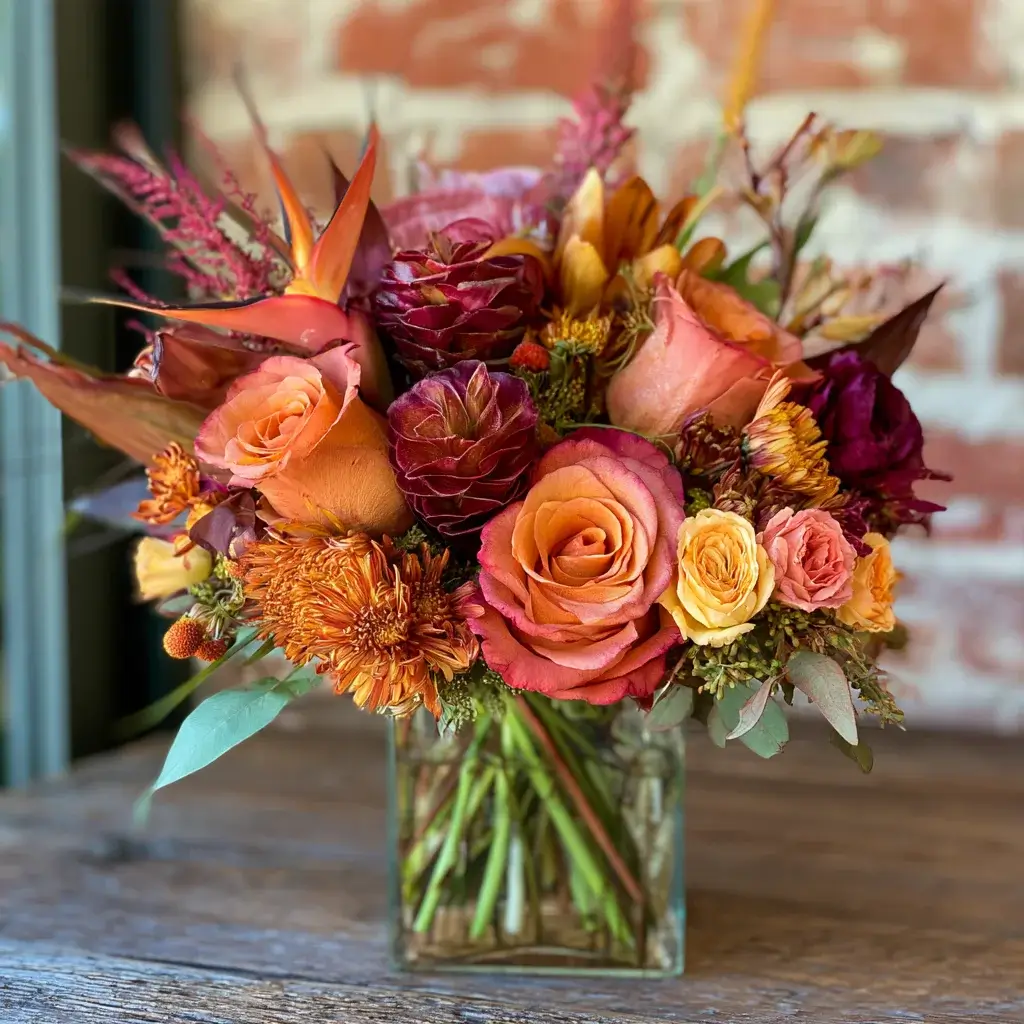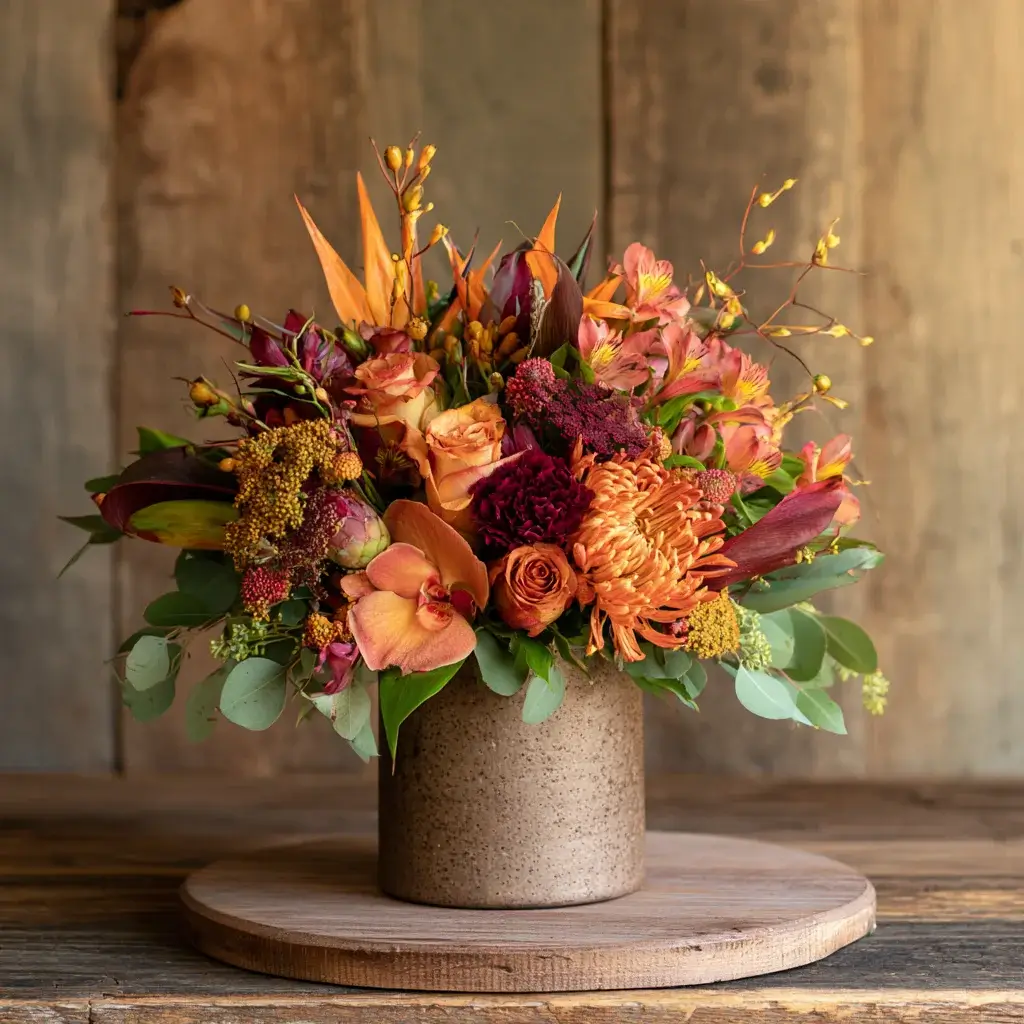




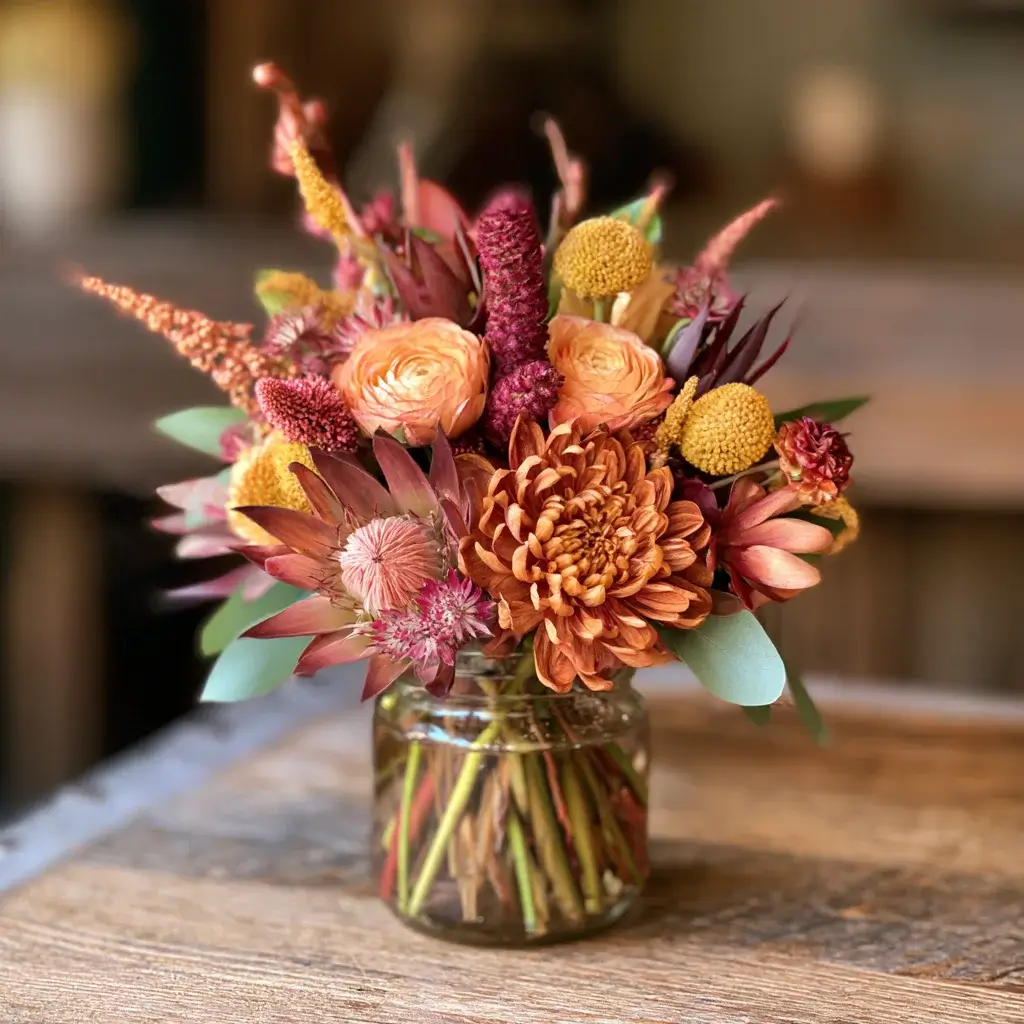
November offers Florida florists a distinct advantage. Milder temperatures and reduced humidity replace the punishing summer heat, creating ideal conditions for harvesting, handling, and arranging blooms. Cut stems experience less heat stress, making them easier to transport and keep fresh. This comfortable weather also opens the door for outdoor weddings, farmers markets, and celebrations, allowing floral designs to shine without midsummer environmental challenges.
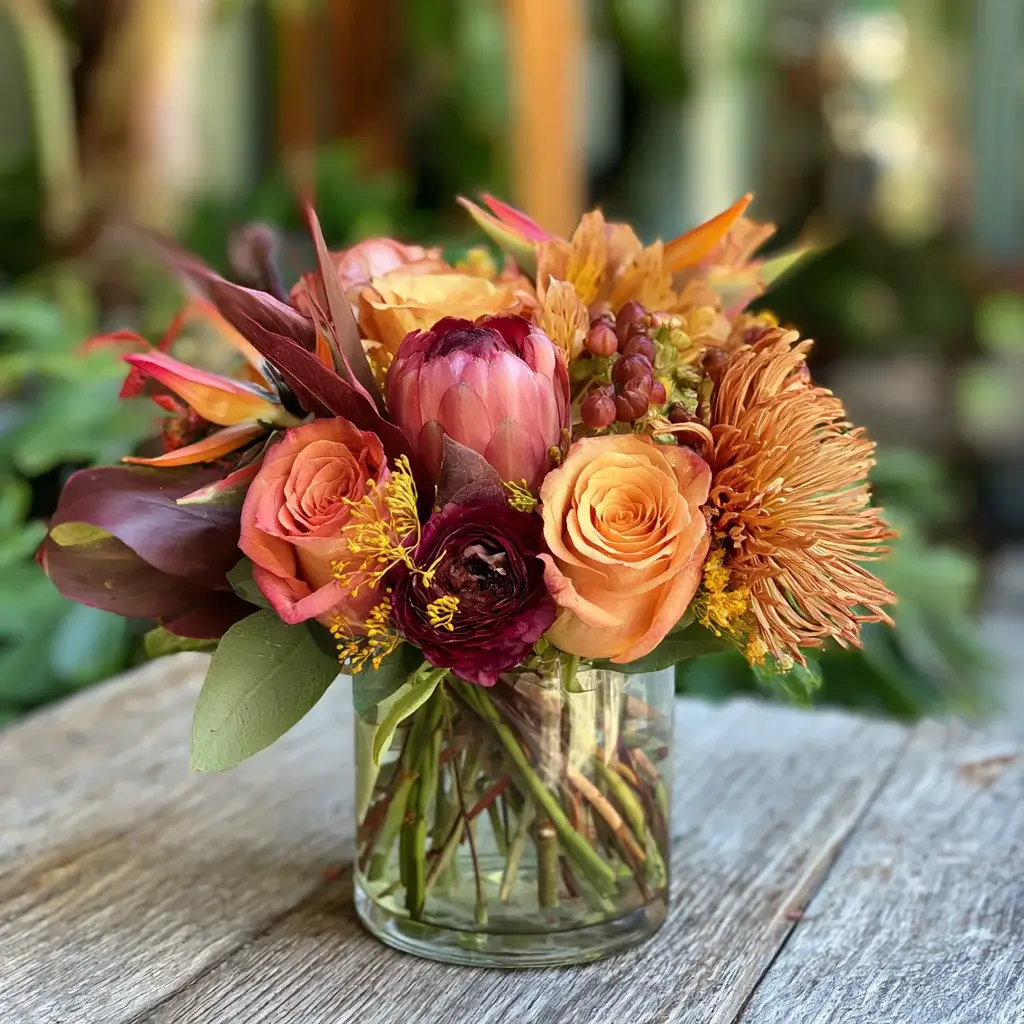
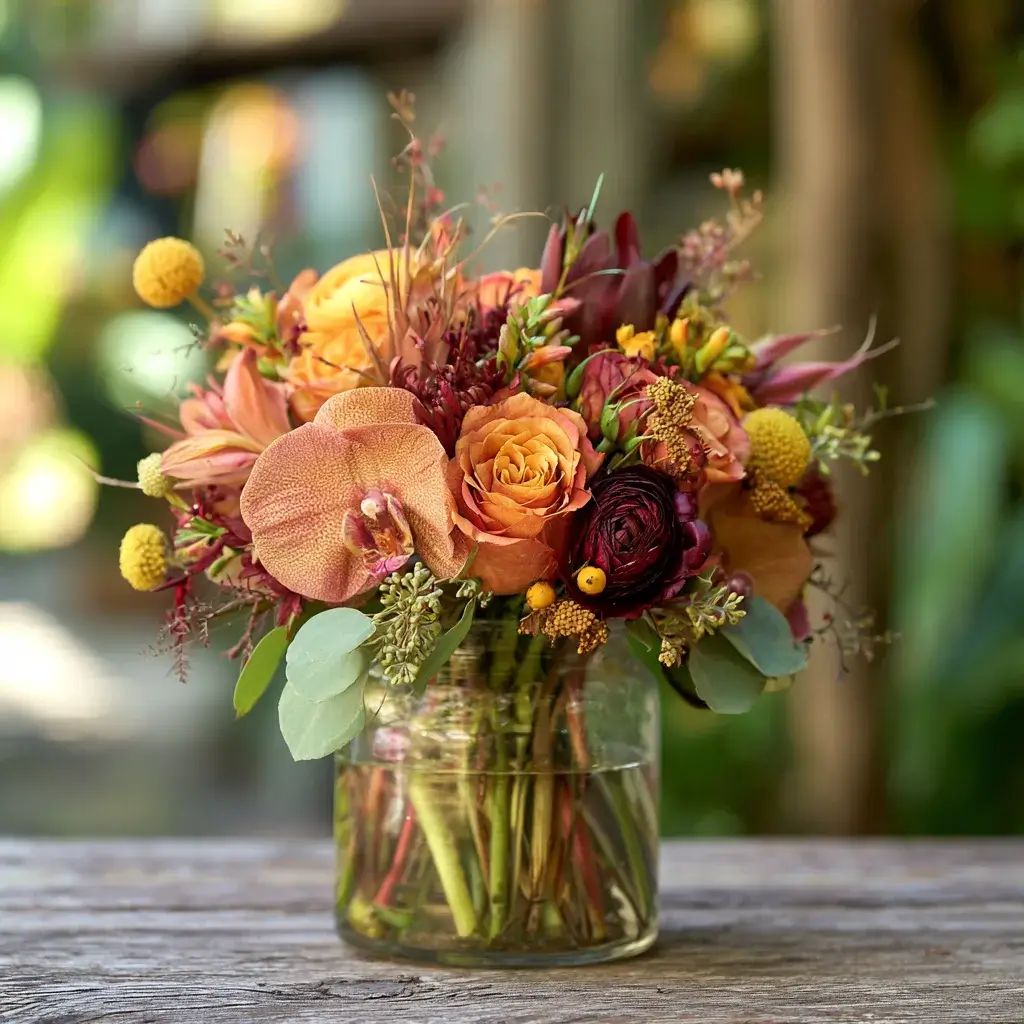
Navigating Regional Weather and Sourcing
Seasonal weather directly impacts flower quality and availability, but conditions vary significantly across the state. North Florida experiences cooler nights, while South Florida, coastal regions, and inland tropical growing areas face different rainfall and temperature patterns.
A sudden cold spell, heavy rain, or an unseasonably warm stretch can alter local harvest schedules. Because availability fluctuates annually, florists must maintain flexible design plans and communicate directly with local growers and wholesalers rather than assuming consistent seasonal availability.
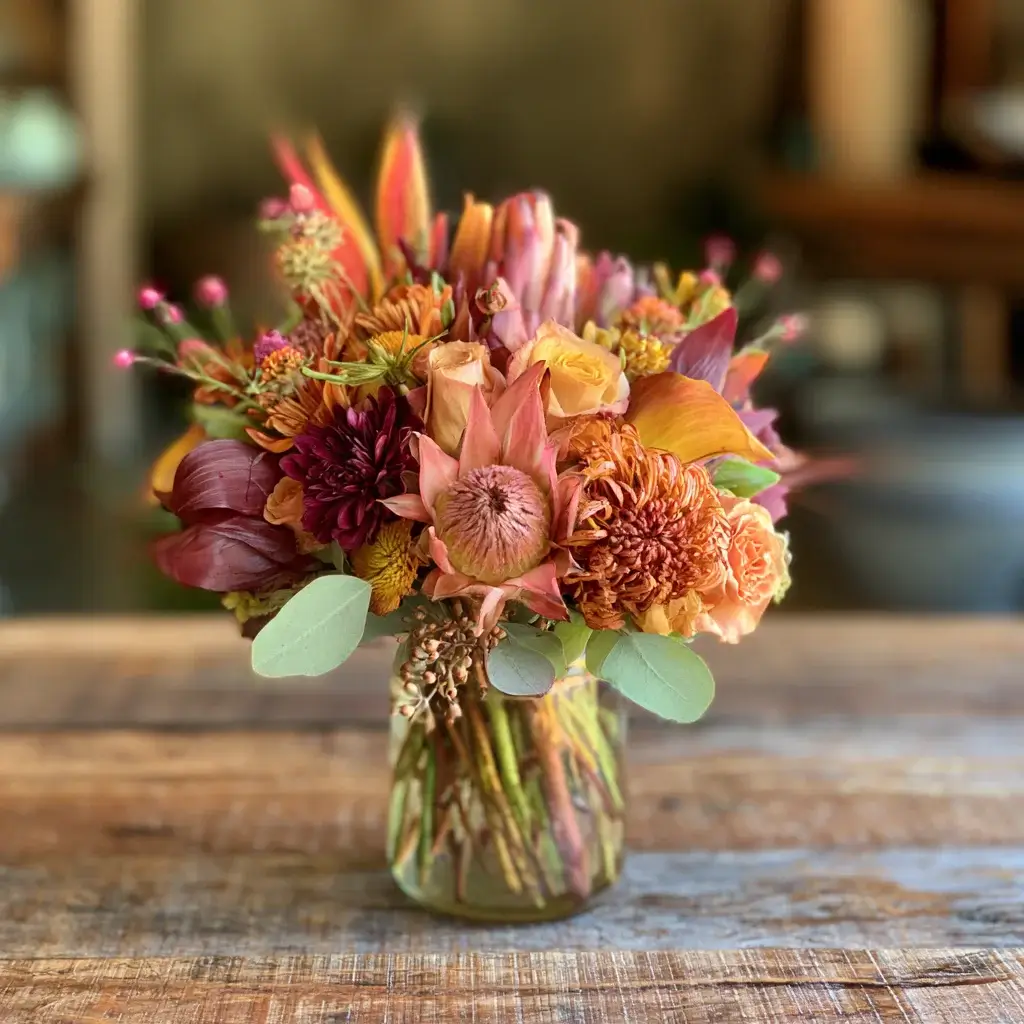
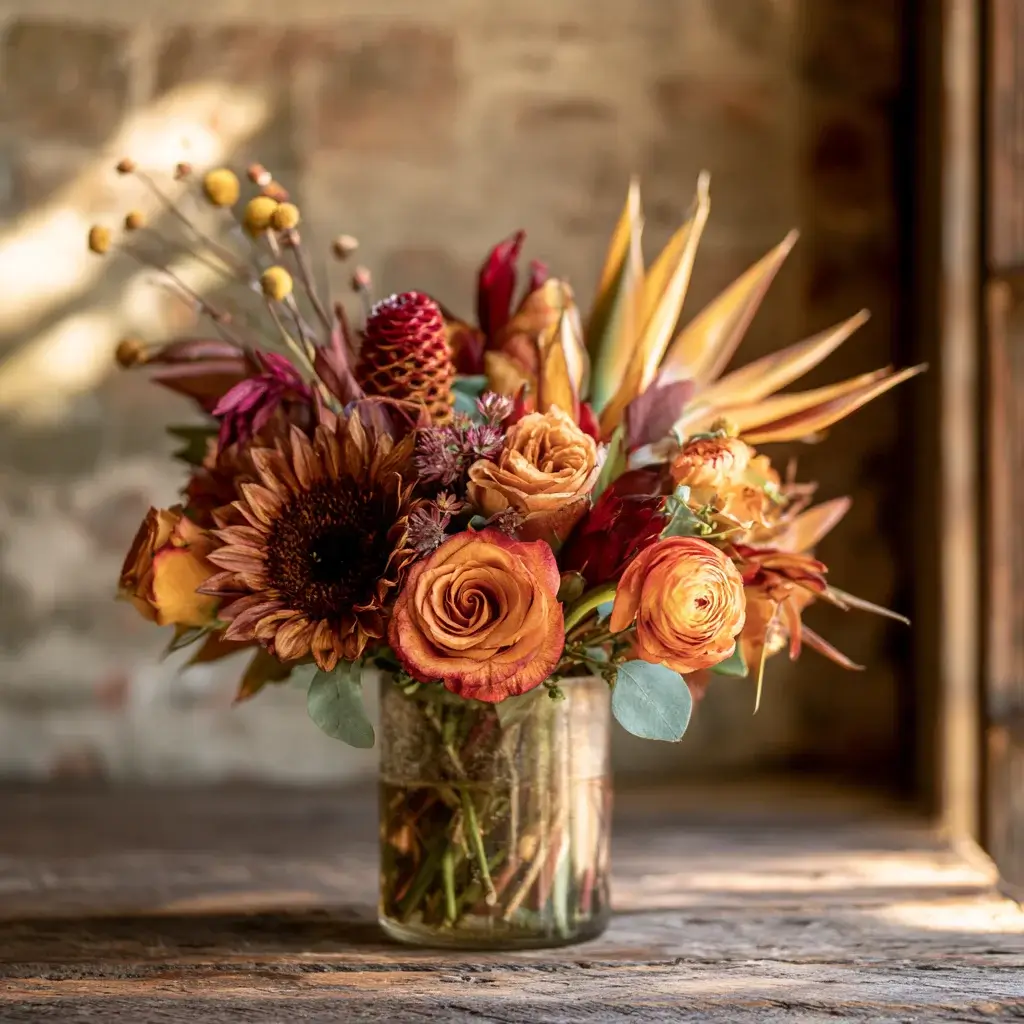
Top Seasonal Flowers for November Arrangements
November allows Florida florists to blend familiar autumn character with the state’s year-round access to tropical foliage. Below are the most effective seasonal blooms for this transitional month.
Chrysanthemums: Dependable Autumn Focals
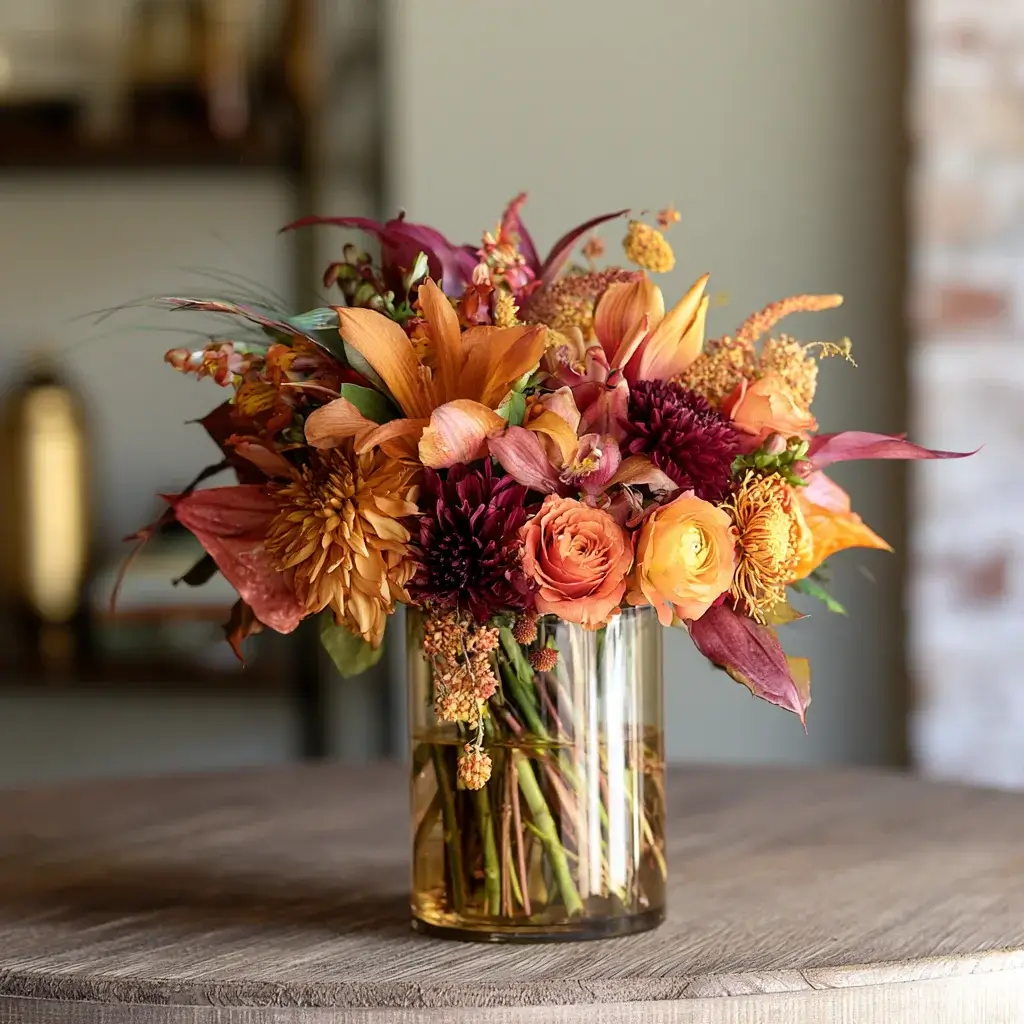
Chrysanthemums provide a reliable color palette ranging from creamy white and buttery yellow to bronze, burgundy, and deep rust. Their rounded forms serve as excellent focal blooms in hand-tied bouquets or add necessary mass to low centerpieces. Compact varieties suit tight designs, while larger heads make an immediate seasonal statement for November events.
Dahlias: Layered Silhouettes
Dahlias offer intricate petal structures, from neat and tightly arranged to loose and dramatic. Available in soft blush, peach, vivid coral, plum, and burgundy, they act as powerful focal flowers. In event work, pair them with simpler supporting flowers to ensure their detailed form remains visible and anchored.
Hypericum Berries: Rustic Texture
Hypericum berries introduce small clusters of color, gentle movement, and an unmistakable autumnal feel. Red, orange, or burgundy berries bridge the tones of chrysanthemums and dahlias. Their branching stems add texture without requiring additional large blooms, making them ideal for tucking through bouquets or softening polished event installations.
Amaranthus and Celosia: Expressive Movement
For distinctive November arrangements, amaranthus and celosia provide exceptional texture. Trailing amaranthus creates cascading lines that draw the eye through a bouquet or over a centerpiece edge. Celosia contributes sculptural, crested shapes in saturated reds, oranges, and rich pinks. Give these strong forms room to breathe rather than crowding them with competing textures.
Integrating Florida Tropicals with Autumn Palettes
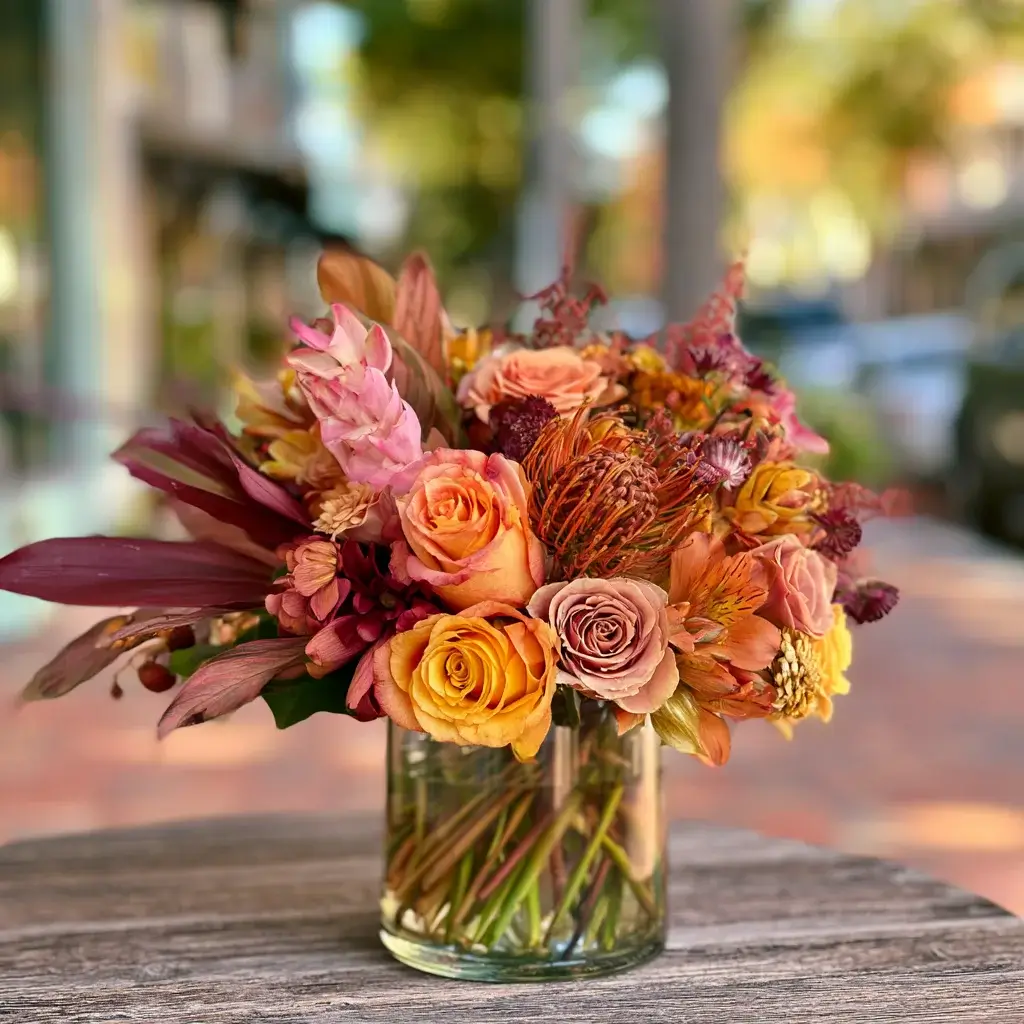
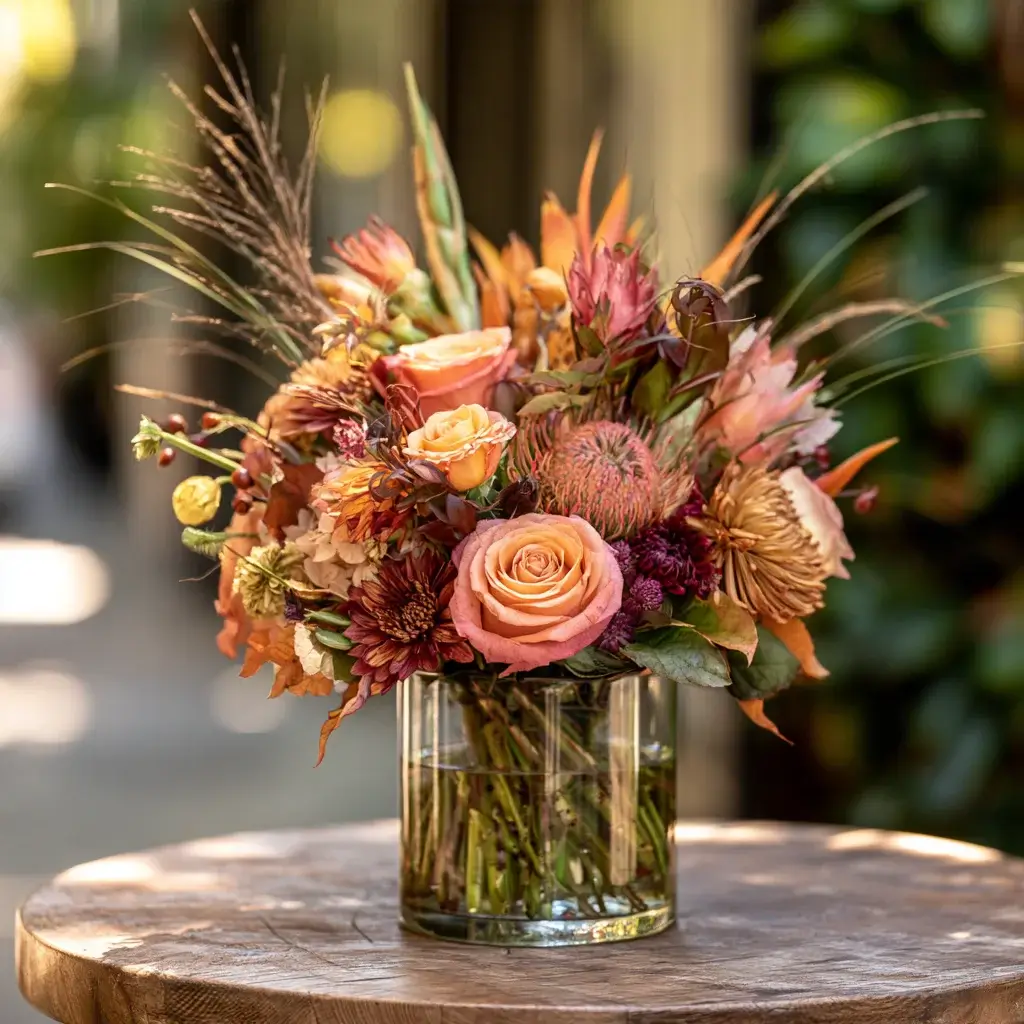
Florida arrangements do not need to rely on traditional mainland autumn aesthetics. Locally sourced anthuriums, orchids, and birds of paradise allow florists to acknowledge the season while expressing the state’s subtropical character. These tropicals complement, rather than replace, conventional fall materials, giving familiar palettes a fresh sense of place.
- Anthuriums: Their glossy, heart-shaped spathes and architectural lines provide a clean, sculptural presence among rounded mums or layered dahlias.
- Orchids: Refined forms and delicate details soften compositions, add graceful movement, and lend an elevated finish to special-order designs.
- Birds of Paradise: Striking silhouettes and vivid colors read as unmistakably tropical. Use them selectively to establish a clear visual role without competing with other elements.
Best Practices for November Floral Design and Merchandising
Build a Clear Design Story
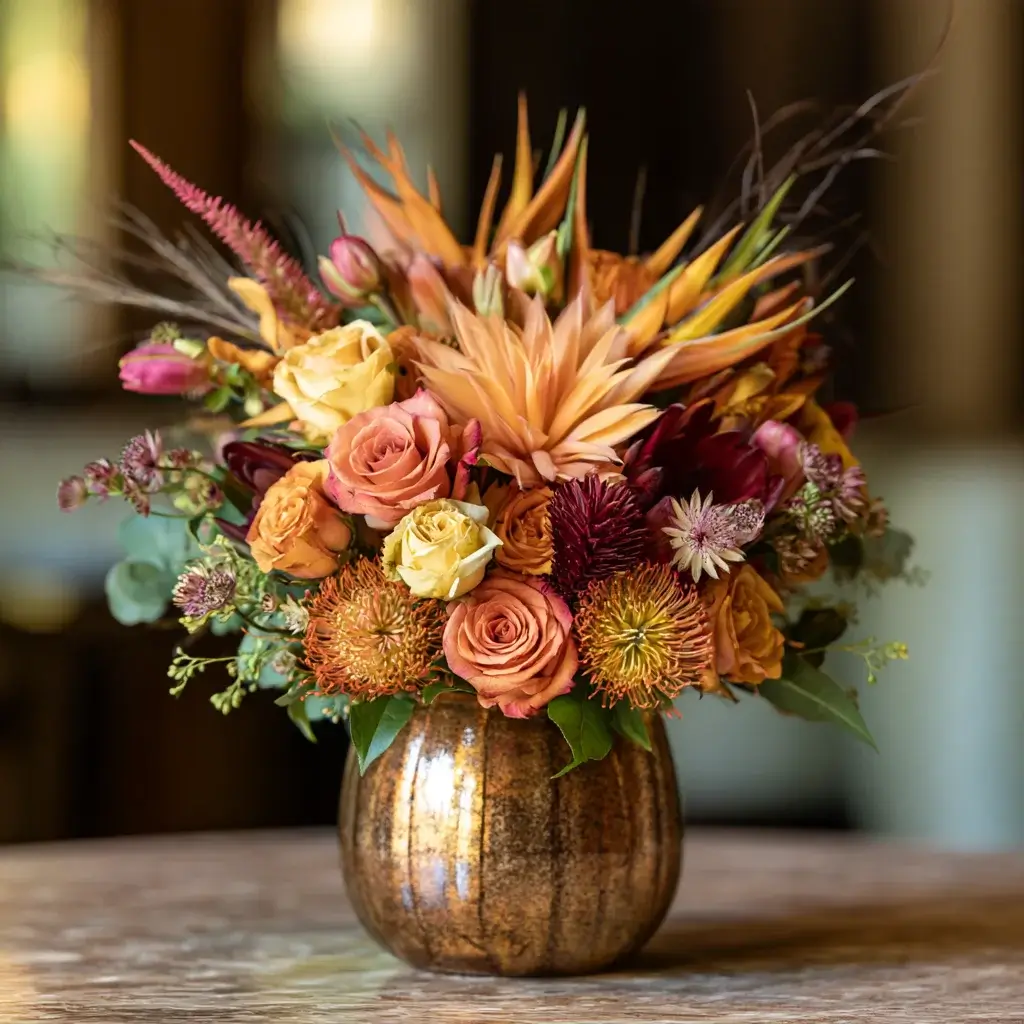
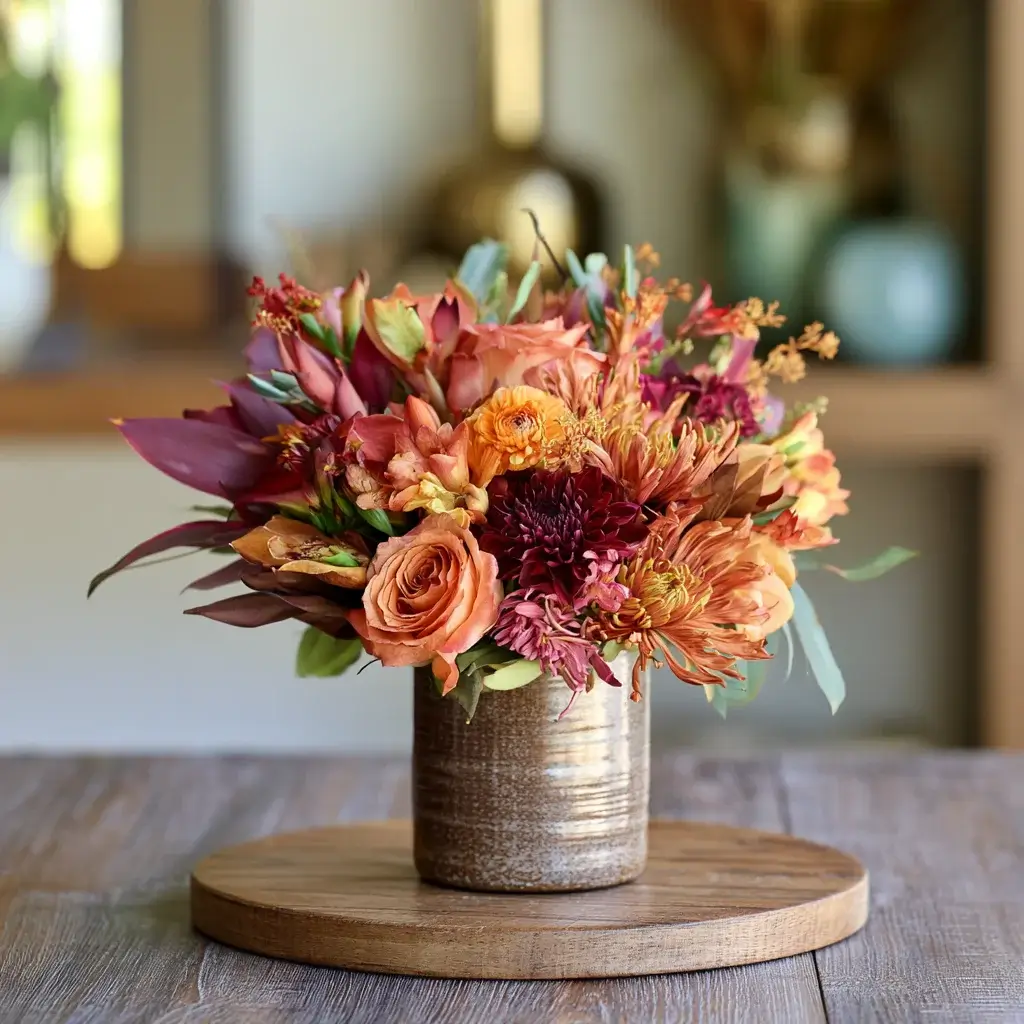
Start each arrangement with one focal flower to establish the mood, such as a dramatic dahlia, garden rose, or local tropical bloom. Build around it with seasonal supporting flowers in warm, layered colors, then introduce texture through amaranthus, celosia, or hypericum berries. A simple, documented recipe helps staff reproduce popular arrangements consistently and adjust quickly when supply changes.
Select Greenery and Finishing Details Strategically
Preserved local leatherleaf fern provides dependable coverage and a rustic note for natural finishes. Before use, assess the fern for color, flexibility, cleanliness, and overall condition. Always consider stem durability and environmental factors. Heat, humidity, handling, and time out of water affect performance at outdoor events. Wedding work requires carefully secured, long-lasting elements, while everyday bouquets should prioritize comfortable handling and easy transport.
Adapt for Different Occasions
Do not rely on a single fixed recipe. Adapt your design story based on the event:
- Use refined proportions and reliable stems for weddings.
- Choose sturdy, durable choices for outdoor gatherings.
- Prioritize approachable sizes and easy handling for everyday bouquets.
- Design seasonal table arrangements with height and placement suited to conversation.
Highlight Florida-Grown Provenance
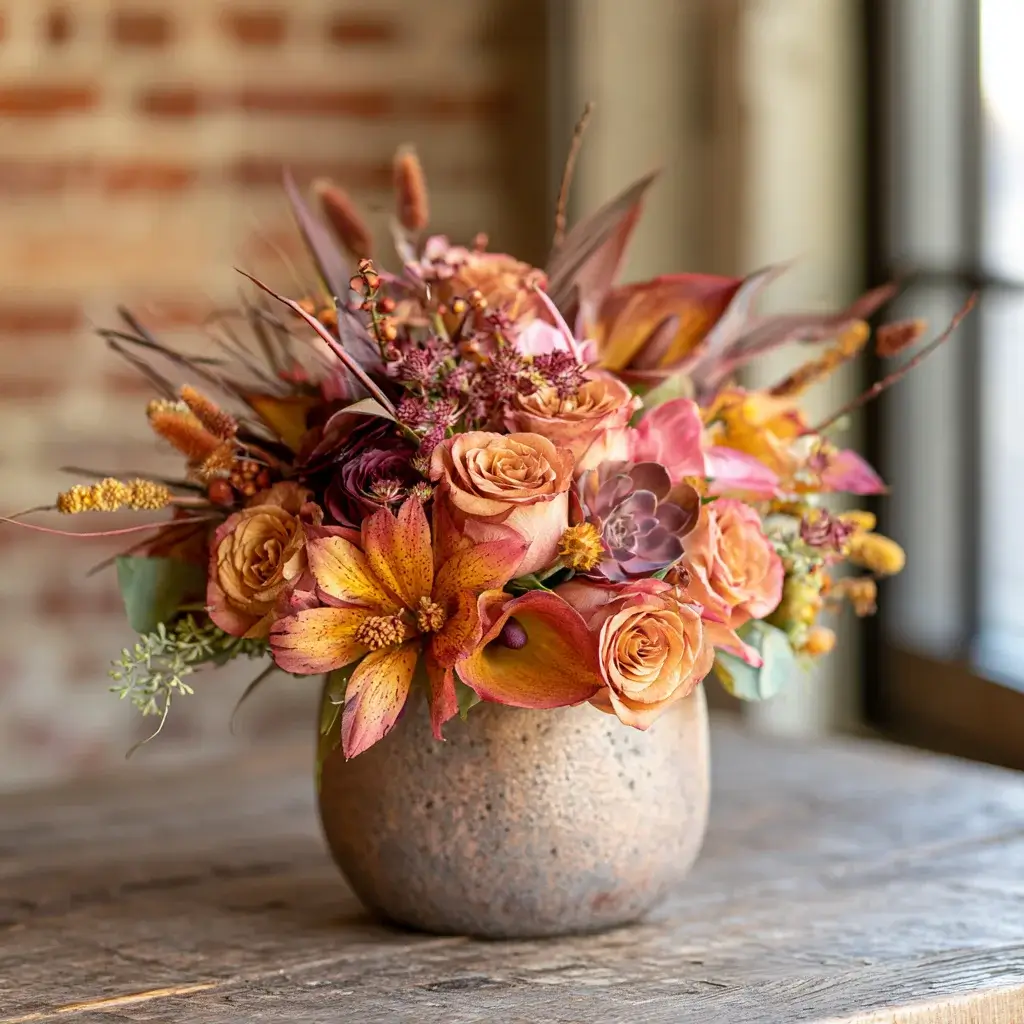
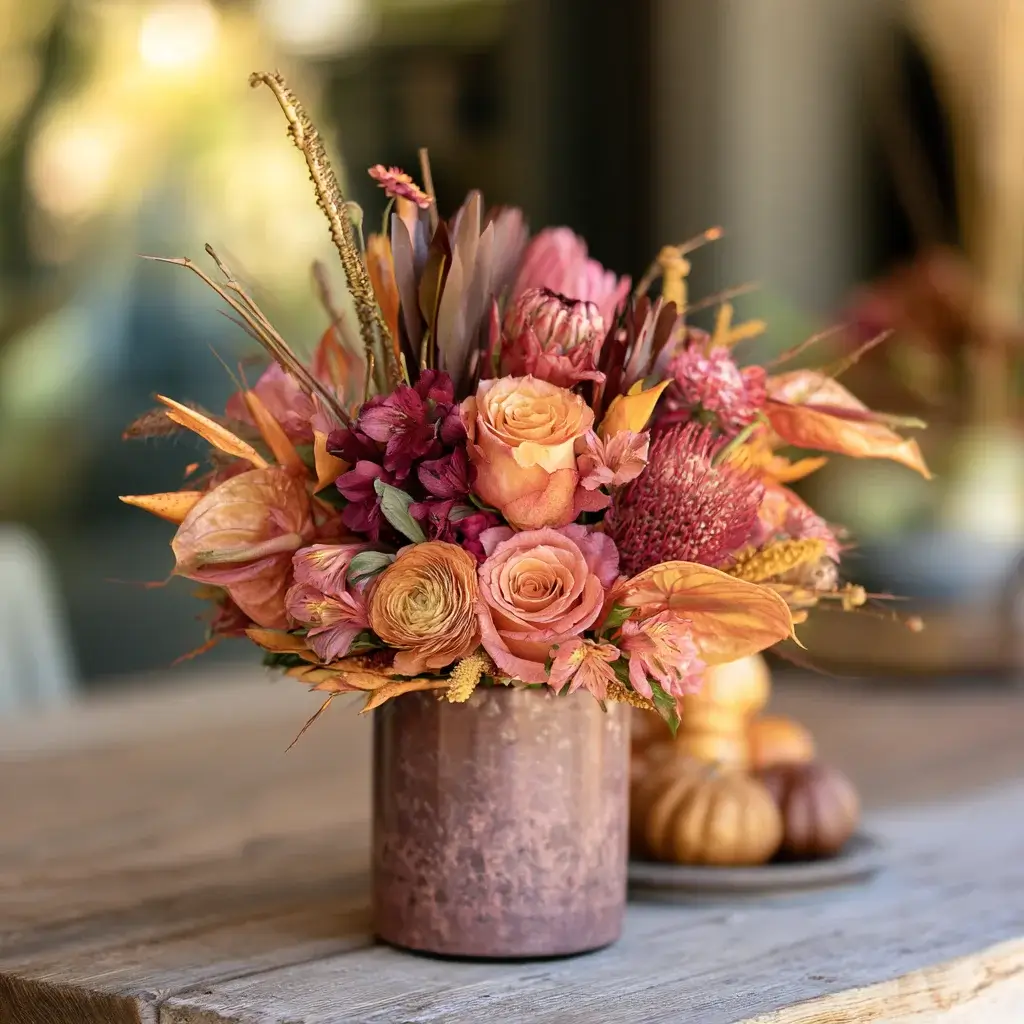
Where sourcing has been verified, clearly identify Florida-grown or locally sourced flowers and foliage. Accurate provenance helps customers understand the value of their purchase and supports community agriculture. Confirm current availability, stem lengths, and harvest timing directly with growers before building recipes or advertising specific offerings.
Offer variations at different price points and prepare substitutes that preserve the arrangement’s color, shape, and texture if a particular flower becomes unavailable. The central November selling proposition is a fresh blend of autumn abundance and Florida’s tropical character: familiar seasonal warmth, expressed with local color and a distinctly regional touch.